Bing Topics Portfolio: Turn AI Visibility Into Plans
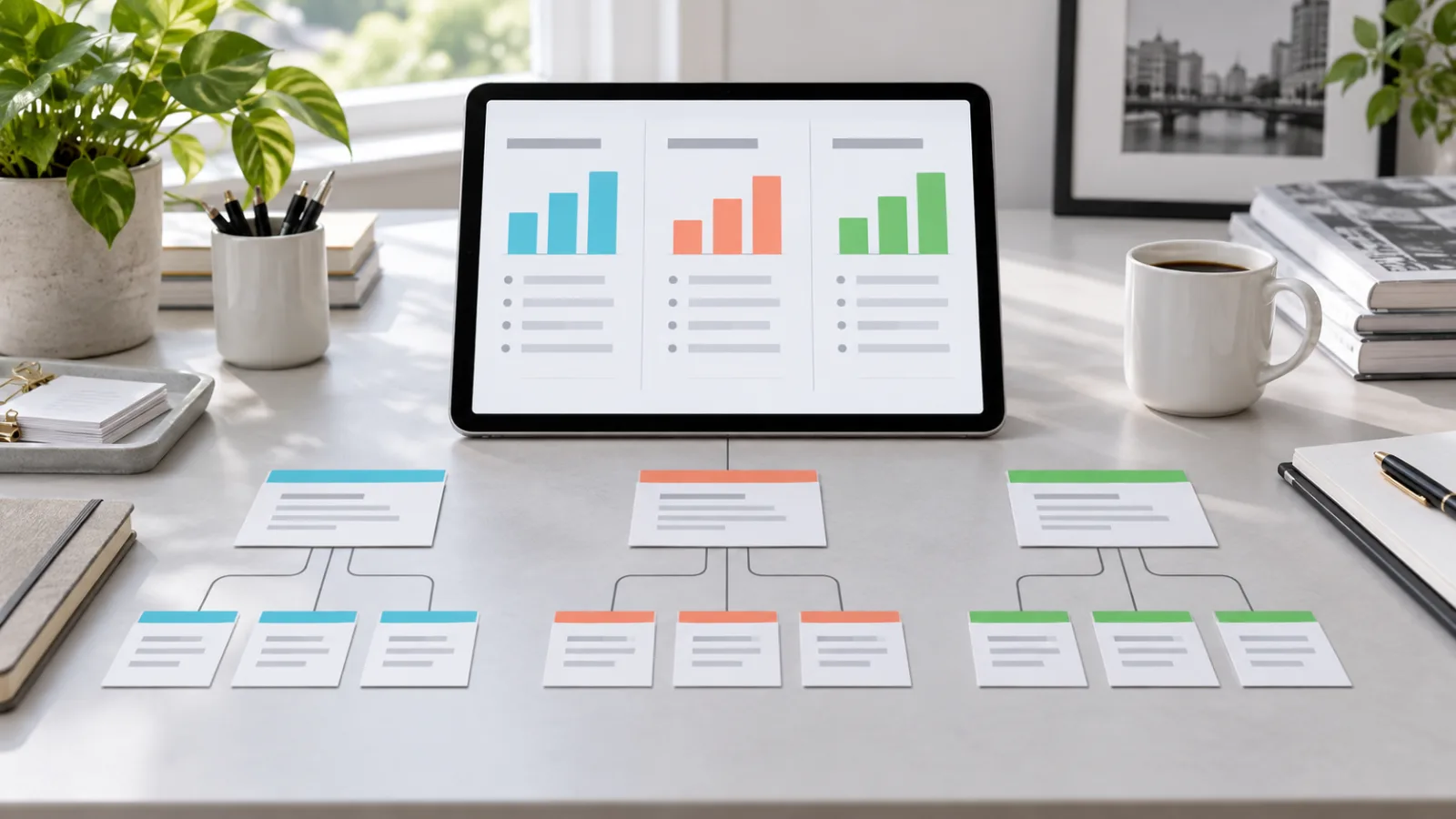
Bing Topics Portfolio is a beta planning view that organizes a site's AI search presence into themes. Use it to shortlist relevant content opportunities, then validate intent, existing coverage, and business fit before creating a brief. Treat approximate ecosystem signals as directional evidence, not traffic forecasts, rankings, or proof that publishing another article will produce citations.
What changed in Bing AI Performance this week?
Microsoft announced Topics Portfolio on October 13, 2026. It adds a thematic view inside AI Performance, including topic context and opportunity queries. Availability depends on sufficient data for the site. Topic Size, Sites Cited, and Queries are approximate; opportunity citation volumes appear as ranges. Bing's announcement.
The useful editorial question is not simply whether a topic looks large. It is whether the site can make a distinctive, accurate contribution that serves its actual audience. A popular theme outside your product, expertise, or service area may be a poor investment even when it attracts substantial attention elsewhere.
This tutorial proposes a decision workflow. It does not report a GEOCARA account test of the new feature, invent a portfolio for your domain, or promise a citation increase. For the underlying report and its scope, start with our Bing AI Performance guide.
How is a topic portfolio different from a keyword list?
A topic portfolio is a planning lens rather than a list of pages to produce automatically. An isolated phrase might belong to several user journeys. A thematic review gives an editor a reason to examine relationships between existing answers, comparison pages, supporting evidence, and the action a reader wants to take.
Bing's June preview already introduced Intents, Topics, Citation Share, and Compare. It described citation share as observational, not a ranking system or traffic-share measure. The October announcement should therefore be read as a new portfolio-level planning view, not as the first time Bing has grouped topics. June's feature announcement.
Keep your page inventory alongside the portfolio. A theme can reveal a need to update one strong resource, merge overlapping pages, improve a comparison, or add missing evidence. None of those choices necessarily requires a new URL.
Our GEO hub explains the broader discipline. Here, the unit of work is a justified content decision, with a named owner and a testable outcome, rather than an unexplained change in a composite score.
What should you record before interpreting a theme?
A reproducible planning record includes the selected site, report surface, period, displayed topic label, relevant page URLs, and capture date. Keep approximate values and displayed ranges in their original form. Do not convert a range into a precise midpoint and present it as measured demand.
Add a confidence note when the available evidence is thin. A partial view can still inform a narrow experiment, but it cannot support a comprehensive statement about the entire market. Keep the observation itself separate from the explanation your team proposes for it.
The following worksheet is an editorial control proposed by GEOCARA, not a Bing scoring formula or a proprietary measurement result.
| Planning field | Question for the reviewer | Evidence to preserve |
|---|---|---|
| Audience fit | Would our intended reader need this answer? | Product scope and user journey |
| Existing coverage | Do we already answer the question well? | Current canonical URLs |
| Evidence availability | Can we substantiate the answer? | Primary references and owned assets |
| Business relevance | What useful next step does the page support? | Relevant offer or educational outcome |
| Observation quality | What is directly visible versus inferred? | Report date, period, labels, and ranges |
| Delivery cost | Can we maintain this resource accurately? | Owner, review date, and effort estimate |
This record makes the decision reviewable when an editor, analyst, and product specialist see different opportunities in the same topic.
How do you qualify an opportunity query?
Opportunity qualification is the process of deciding whether a reported gap deserves work. Read the phrase as a user problem, not as an instruction to repeat those words in a title. Ask what a satisfactory answer would contain and whether your organization can genuinely provide it.
First, identify the intent. Is the user learning a concept, comparing alternatives, troubleshooting a problem, or looking for a specific organization? Second, check scope: country, language, product type, and level of expertise can change what counts as a useful answer. Third, find the existing page that most closely addresses that need.
Reject opportunities that would require invented experience, fabricated tests, unsupported comparisons, or a misleading promise. If evidence is missing but can be obtained legitimately, put that evidence task ahead of the writing task.
Bing explicitly warns that a branded query can appear as an opportunity. Do not turn that into a recommendation to impersonate another brand, create confusing navigation pages, or imply an affiliation. Beta limitations.
For a legitimate comparison, state the audience, criteria, limitations, and sources. A fair answer may conclude that another option better fits a particular use case. Accuracy is more useful than forcing your product into every recommendation.
How do you avoid publishing duplicate answers?
Duplicate-answer prevention starts with an inventory of intent, not just title similarity. Different headlines can answer the same question, while similar words can describe materially different needs. Review the main promise, audience, useful evidence, and next step of each candidate page.
Classify the proposed work into one of four actions: retain the existing resource, update it, consolidate overlapping resources, or create a genuinely distinct answer. Record why the chosen action is better for the reader. Do not remove URLs casually; consolidation also requires redirect, canonical, internal-link, and content-preservation decisions.
Check navigation and contextual links before assuming the answer is missing. The content might exist but be disconnected from the relevant hub. An editor should be able to follow the topic from an overview to the detailed answer without encountering several interchangeable pages.
Use our GEO content audit checklist to review the selected page. A free AI visibility check can flag technical issues, but it does not establish that a specific topic opportunity will convert or that Bing will cite the result.
What belongs in the resulting content brief?
A topic-led brief should name the reader's question, the intended answer, evidence requirements, and the existing pages it complements. It should also state what the writer must not claim. These boundaries are especially valuable when a generative writing tool proposes confident comparisons or numerical benefits.
Start with an answer-first outline. Define the topic in plain language, address the practical decision, and include only the sections required to support it. Add a comparison table or checklist when it clarifies the choice; do not introduce a table merely because it looks machine-readable.
Assign an accountable reviewer for factual accuracy and a maintenance owner for changing details. List the exact primary sources and distinguish documented provider behavior from your team's recommendations. If a product capability is not implemented, the brief must not describe it as available.
For an agency handoff, include a short acceptance checklist: supported claims, correct internal links, visible author identity, relevant imagery, indexability, and a documented measurement plan. Our agency GEO reporting guide helps communicate these distinctions without turning deliverables into unproven outcomes.
How should you measure whether the work helped?
Measurement should distinguish execution, observed visibility, and business outcomes. Execution asks whether the approved resource was published correctly. Visibility asks whether relevant pages appear in the monitored report or answer sample. Outcomes ask whether measured people visit, engage, or complete an intended action.
Choose a baseline before making the change. Keep equal-length comparison periods, record the updated URLs, and preserve the report's scope. A rise in total citations can coexist with a fall in the specific theme you care about. Conversely, a useful page update might improve reader engagement without changing a small citation sample.
Avoid a causal claim when several things changed together. Model changes, query mix, seasonality, competing content, and retrieval freshness can all complicate interpretation. If you cannot isolate the effect, describe the observed association and the uncertainty rather than presenting a guaranteed return on the writing effort.
Track actual referrals and conversions separately. A cited page is not a visitor, and a visitor is not a customer. Never substitute crawler requests, healthchecks, or automated checker runs for human sessions. The AI visibility versus mention-tracking guide provides a useful measurement vocabulary.
What if the portfolio is missing or a label looks wrong?
Missing or unexpected report output is an investigation trigger, not a verdict about your expertise. Verify the selected property, date range, and access first. Then record what is available, what is absent, and what the interface actually says. Do not manufacture a portfolio from an unrelated domain.
Bing describes the classification as AI-generated and warns that labels can be imperfect. Treat a questionable theme as a reason to inspect the underlying evidence, not an instruction to rewrite a site around that label. Topics Portfolio limitations.
Keep independent technical checks in place. Google, for example, describes indexed and snippet-eligible pages as a requirement for supporting links in its AI search features, without guaranteeing inclusion. A Bing theme is not evidence that Google, ChatGPT, or another engine retrieved the same resource. Google's AI search requirements.
Frequently asked questions
Is Topics Portfolio a universal AI search market report?
No. Interpret it within the selected site's Bing report and displayed period. Do not extend an observation to every engine, country, language, or product category without separate evidence.
Should the largest theme receive the next article?
Not automatically. Prioritize audience fit, credible evidence, existing coverage, maintenance cost, and business relevance. A smaller useful theme can deserve attention ahead of a large irrelevant one.
Can an opportunity become an update instead of a new page?
Yes. If an existing page already serves the same intent, improving it can be more coherent than publishing an overlapping resource. Document the missing information and preserve useful content.
Can citation ranges be converted into a revenue estimate?
Not without an independent and defensible model of visits, conversion, and value. Keep the displayed range as directional evidence rather than inventing a customer acquisition forecast.
Does GEOCARA provide access to Bing's account report?
This article does not claim that GEOCARA imports or unlocks Topics Portfolio. Access to Bing's own reporting remains separate from GEOCARA's checker, audits, and measurement workflows.
Start with one justified editorial decision
Select a relevant theme, qualify one user question, and inspect the best existing answer. Decide whether to update or create, collect evidence, and document the expected outcome before publishing. Review the result with the same measurement scope. This turns a beta planning signal into accountable editorial work without inventing rankings, traffic, or citations.
Youssef builds GEOCARA and has run visibility probes across AI engines since 2025. He writes from measured probe data, not speculation.
LinkedIn ↗Related GEO guides
Choose your plan
Audit your site and see how AI engines perceive you.