Bing AI Performance: How to Track Copilot Citations
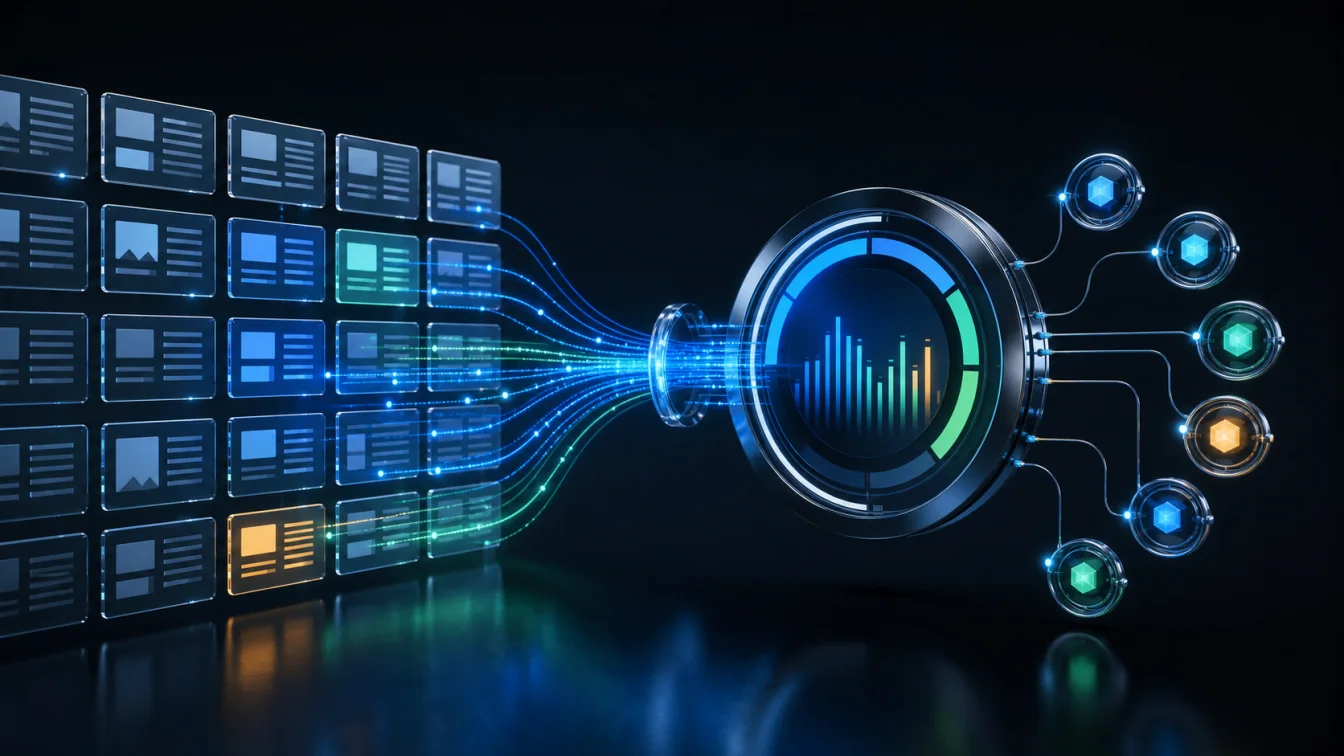
Bing AI Performance is a free report in Bing Webmaster Tools that shows when a verified site is cited across Microsoft Copilot, AI-generated Bing summaries, and select partner experiences. Use it to identify cited pages and grounding queries, then connect those signals to search traffic and conversions rather than treating citation counts as rankings.
What is Bing AI Performance?
For the October 2026 planning view, follow our Bing Topics Portfolio tutorial. It explains how to qualify a theme before turning it into a content brief.
Bing AI Performance is Microsoft's first-party citation report for publishers. It records visible references to a verified domain across supported Microsoft AI experiences and organizes them by date, cited URL, and the phrases used during retrieval. Microsoft launched the report in public preview in February 2026 as an early step toward dedicated Generative Engine Optimization tooling (Bing Webmaster Blog).
The report currently covers Microsoft Copilot, AI-generated summaries in Bing, and select partner integrations. That scope matters. A citation shown here is evidence of visibility within Microsoft's supported grounding ecosystem, not proof that ChatGPT, Claude, Gemini, or Perplexity cited the same page.
Bing also states that AI Performance measures citations, not authority, ranking, importance, or the position of a source inside an answer (Bing AI Performance help). The safest interpretation is therefore: "this content was visibly used as a source," not "this page ranked first in AI search."
Which metrics does the report show?
The core dashboard separates citation volume from the breadth and context of that visibility.
| Metric | What it measures | What it does not measure |
|---|---|---|
| Total citations | Times content from the site was visibly referenced during the selected period | Unique users, clicks, or citation position |
| Cited pages | Unique URLs from the site cited on a given day | Page quality or authority |
| Average cited pages | Average number of unique cited URLs per day | Average ranking or share of traffic |
| Grounding queries | A sample of phrases used to retrieve cited content | Every user prompt or a complete keyword universe |
| Page-level citations | Citation activity attributed to a specific URL | Why that URL was selected |
| Citation trend | Changes in citation activity over time | Causal impact of a content change |
Microsoft's current help documentation also describes preview capabilities for intents, topics, citation share, and period comparisons. Where available, intents classify retrieval phrases by purpose, topics cluster related phrases, and citation share estimates a site's portion of citations for a specific grounding query. Because these are preview features, availability and definitions can evolve.
This distinction is essential for reporting. If one page receives 100 citations, that does not mean 100 people visited it. One answer can include several cited pages, the same page can be cited repeatedly, and the report aggregates multiple AI surfaces. Treat citations as an exposure metric and analytics sessions as an engagement metric.
How do you set up Bing AI Performance?
The report is available inside Bing Webmaster Tools for verified sites. A practical setup takes five steps:
- Verify the canonical domain. Add the exact protocol and host you use in canonical URLs, or import an existing verified property from Google Search Console.
- Submit the XML sitemap. Confirm that the sitemap returns
200, contains canonical indexable URLs, and shows a successful status in Bing. - Check crawler access. Review
robots.txt, meta robots directives, response codes, and CDN bot controls. Bing says AI Performance respects publisher preferences expressed through robots.txt and other supported controls. - Open AI Performance. Select a date range and establish a baseline for total citations, average cited pages, cited URLs, and grounding queries.
- Annotate changes elsewhere. Record publication dates, major content updates, migrations, and crawler-rule changes in your reporting system because Bing does not know which intervention you intended to test.
For new or materially updated URLs, IndexNow can notify participating search engines that content changed. The protocol is a discovery signal, not an indexing or citation guarantee, but it reduces the time spent waiting for a routine recrawl (IndexNow documentation).
Before interpreting citation data, run the free AI visibility checker to find crawlability, Answer First, structure, schema, and trust gaps that can make content harder to retrieve or reuse.
How should you analyze cited pages?
Start with distribution, not the sitewide total. Export or review cited URLs and group them by content type, topic, intent, publication date, and conversion role. This reveals whether visibility is concentrated in one guide or spread across a durable topic cluster.
For each highly cited page, ask:
- Which question does the page answer more clearly than nearby pages?
- Does the answer appear early and remain understandable outside its original context?
- Which original facts, examples, tables, or definitions make the page useful as evidence?
- Are the title, H1, headings, and body aligned around one intent?
- Does the page link to a logical next step for a reader who arrives after seeing an AI answer?
Do not rewrite a winning page merely because it is receiving citations. Preserve the passage that appears to satisfy the retrieval need. Improve freshness, supporting evidence, internal links, and conversion paths around it.
Next, inspect pages that rank or receive impressions in Bing Search but have few AI citations. That contrast is often more actionable than comparing unrelated pages. The missing element may be a direct definition, a complete answer block, clearer headings, stronger evidence, or a better match between page scope and grounding query.
Microsoft's own content guidance recommends precise titles, question-led headings, concise self-contained answers, lists, tables, and visible HTML for important information. It also warns against hiding essential answers in tabs, relying on PDFs for core information, or placing key facts only in images (Microsoft Advertising AI search guide).
What are grounding queries, and how should you use them?
A grounding query is the phrase an AI system uses to retrieve web evidence while composing an answer. It may be related to the user's original prompt without matching it word for word. Bing explicitly describes the displayed data as a sample, so it should guide topic decisions rather than serve as a complete keyword-volume report.
Use grounding queries in three passes:
Validate intent. Confirm that the cited page genuinely answers the retrieved phrase. If it does not, the citation may be incidental or unstable.
Map query to page. Bing's query-to-page mapping lets publishers move in both directions: select a grounding query to see its cited pages, or select a page to see associated queries (Microsoft Advertising dashboard update). Look for several pages competing for the same narrow intent, as well as one page being stretched across unrelated intents.
Find adjacent gaps. Turn repeated phrases into a small question map. Strengthen the existing page when the new question is a subtopic. Create a separate page only when the intent, expected answer, and conversion path are distinct. This keeps the cluster useful without creating thin pages that cannibalize one another.
The broader GEO hub explains how topic authority, entity clarity, evidence, and retrieval-ready structure work together. For engine-specific eligibility, use the guide to getting recommended by Microsoft Copilot.
How do you connect citations to traffic and conversions?
AI citation reporting and web analytics answer different questions. Bing shows whether content was used as a source. Plausible, GA4, server-side events, or another analytics system show whether a person visited and what happened next.
Build a simple weekly measurement chain:
- Exposure: total citations, cited pages, and query clusters from Bing AI Performance.
- Discovery: Bing Search impressions, clicks, CTR, and position for the same pages.
- Engagement: sessions, engaged visits, landing pages, and AI or Bing referrers in analytics.
- Conversion: checker completions, verified leads, registrations, created sites, audits, trials, or revenue.
Do not divide analytics sessions by citations and call the result a click-through rate. Bing does not state that every counted citation was shown to a unique person, and the denominator aggregates supported surfaces. Instead, compare trends by week and page. A cited page with no measurable visits may still influence discovery, but it needs a stronger reason to click. A cited page that drives registrations deserves more internal support and regular freshness checks.
For cross-engine measurement, use the three-layer AI visibility framework and the practical guide to tracking brand mentions across AI engines. Together they separate technical readiness, observed mentions and citations, and actual referral outcomes.
How often should you review the data?
Review AI Performance weekly for decisions and daily only for monitoring anomalies. Citation data can arrive with processing delay, sampled grounding queries can change, and short windows are naturally volatile. A zero day does not prove that visibility disappeared, just as a spike does not prove that an edit caused it.
A defensible comparison uses equivalent windows:
- Compare the latest complete seven days with the previous seven complete days.
- Note incomplete or delayed dates rather than silently treating them as zeros.
- Compare cited pages and grounding-query themes, not only the headline total.
- Keep a change log with publication, update, indexing, and robots events.
- Wait for enough post-change data before drawing a causal conclusion.
For agencies, include Bing AI Performance as a first-party citation source inside a broader GEO client reporting framework. Label the platform scope and preview status clearly so a client does not mistake Microsoft citation activity for universal AI visibility.
What can Bing AI Performance not tell you?
The report does not identify a universal AI ranking, reveal Microsoft's retrieval algorithm, show every original user prompt, or prove that a citation generated a visit or sale. It also does not cover every answer engine.
It cannot replace qualitative review. A citation can describe a brand incorrectly, support an irrelevant answer, or appear beside stronger competitors. Periodically open the relevant AI experiences and inspect how the brand and page are represented.
Finally, AI Performance is a public-preview product. Sampling, feature access, supported surfaces, and processing behavior can change. Use exported snapshots and documented definitions when the data feeds business reporting.
FAQ
Is Bing AI Performance free?
Yes. Bing AI Performance is included in Bing Webmaster Tools for verified sites. It does not require a paid Microsoft Advertising account.
Does the report include ChatGPT citations?
Bing documents Microsoft Copilot, AI-generated summaries in Bing, and select partner integrations as supported surfaces. It does not promise complete ChatGPT citation reporting, so do not label the data as ChatGPT visibility.
Are total citations the same as clicks?
No. Total citations count visible source references in supported AI answers. They do not represent unique users, sessions, or visits. Use web analytics and conversion events to measure traffic and outcomes.
Why does the latest day look unusually low?
Recent data may be incomplete because processing and aggregation take time. Grounding queries are also sampled. Compare complete equivalent periods and annotate delayed dates instead of treating every short-term decline as a real loss.
What should I optimize first after reading the report?
Start with pages that already earn citations for commercially relevant grounding queries. Preserve the useful answer, improve evidence and freshness, add a clear next step, and support the page with relevant internal links. Then address indexed pages with strong search demand but weak citation activity.
For the operational handoff after a content correction, use our IndexNow freshness workflow. It separates publication, notification, indexing, and observed citations instead of treating a submission response as a visibility result.
Sources
- Introducing AI Performance in Bing Webmaster Tools Public Preview - Bing Webmaster Blog, February 10, 2026
- AI Performance in Bing Webmaster Tools - Bing Webmaster Tools Help
- The AI Performance dashboard - Microsoft Advertising, March 23, 2026
- Optimizing Your Content for Inclusion in AI Search Answers - Microsoft Advertising, October 8, 2025
- What is IndexNow? - IndexNow
Youssef builds GEOCARA and has run visibility probes across AI engines since 2025. He writes from measured probe data, not speculation.
LinkedIn ↗Related GEO guides
Choose your plan
Audit your site and see how AI engines perceive you.