GEO & AI visibility insights
The GEOCARA blog publishes practical, evidence-based guides to Generative Engine Optimization and AI visibility. Learn how to structure direct answers, strengthen entity and trust signals, measure citations, and improve your chances of being discovered and cited by ChatGPT, Perplexity, Gemini, Claude, Copilot, and Google AI search.

ChatGPT Sponsored Agents vs Organic AI Visibility
Understand ChatGPT Sponsored Agents, separate paid ads from organic AI citations, and build a measurement plan for leads, conversions, and GEO reporting.
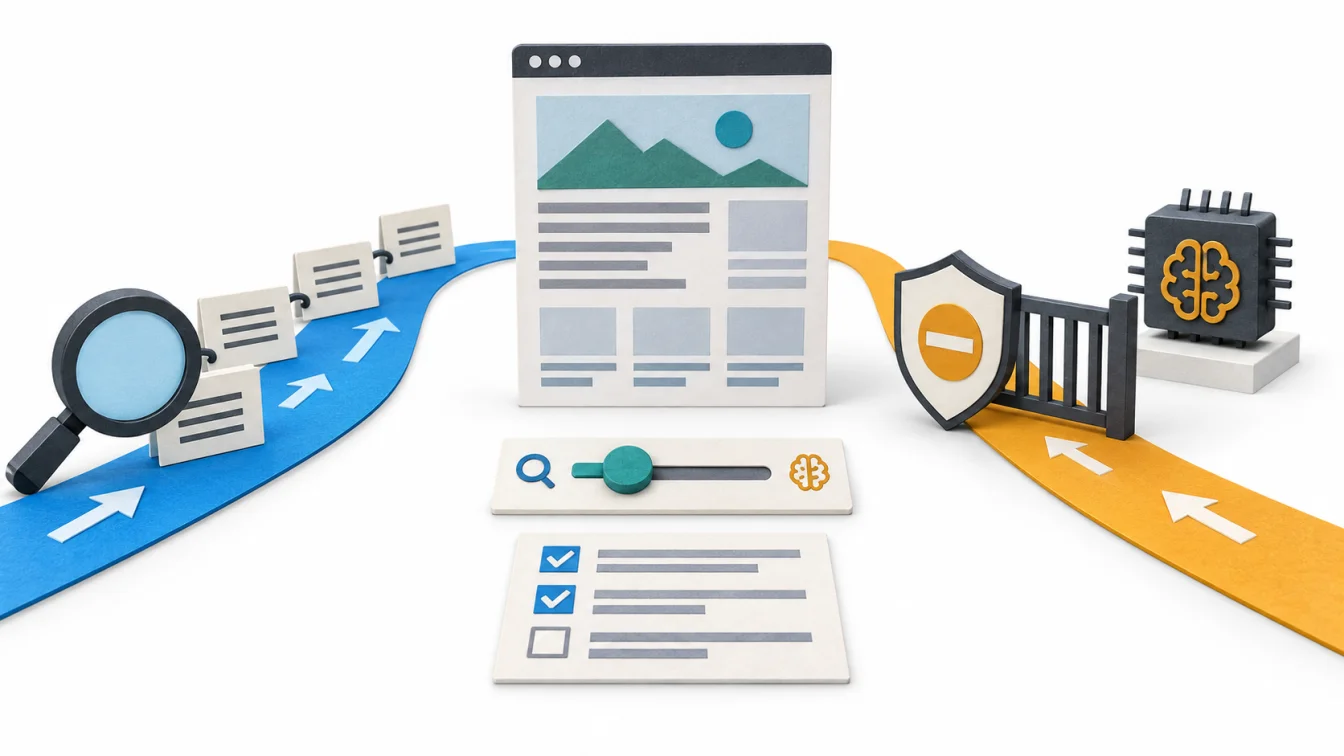
Block AI Training Without Blocking Search Crawlers
Learn how to block AI training without blocking search crawlers. Audit robots.txt, Cloudflare controls, provider exceptions, and safe rollout checks.

AI Product Recommendations: Audit Beyond the API
Audit AI product recommendations across chat interfaces and APIs. Build a repeatable test, separate mentions from citations, and prioritize factual fixes.

ChatGPT Atlas SEO: OpenAI's New Publisher Checklist
OpenAI's updated publisher guidance explains how ChatGPT Atlas discovers, cites, and interacts with websites. Use this technical SEO checklist.

AI Search Cuts Publisher Clicks: The Next SEO Move
A new field experiment links AI Mode and AI Overviews to fewer publisher clicks. See what the evidence means for SEO, GEO, and conversion strategy.

Google Site Reputation Abuse Policy: 2026 EEA Update
Google changed how site reputation abuse manual actions affect EEA users. Learn what changed, what did not, and how to audit third-party content safely.

Google Search Console AI Performance Report: Guide
Google's AI Performance report is now global. Learn what its Search Console impressions mean, its limits, and how to turn visibility into clicks.
Google Favicon SEO: Fix Missing Icons in Search Results
Fix a missing Google favicon with the updated 2026 format rules, crawl checks, HTML markup, Search Console validation, and recovery timeline.

How to Track ChatGPT Referral Traffic in GA4 (2026)
Track ChatGPT referral traffic correctly in GA4 and Plausible using OpenAI's UTM signal, AI Assistant channels, landing pages, and conversion events.

Bing AI Performance: How to Track Copilot Citations
Learn how to use Bing AI Performance to track Copilot citations, grounding queries, cited pages, trends, limits, and practical GEO opportunities.

Google Preferred Sources Button: A Publisher Guide
Learn how Google's Preferred Sources button works, where it can highlight your content, and how publishers can implement, promote, and measure it.

How to Check If ChatGPT Can See Your Website
Test whether ChatGPT search can access your website by checking OAI-SearchBot, robots.txt, indexing, HTTP responses, rendering, and referral evidence.

How to Check AI Visibility: A 3-Layer Guide
Learn how to measure AI readiness, live brand mentions, citations, and AI referral traffic without confusing three different visibility signals.

AI Visibility Checker vs Mention Tracking
Understand the difference between website AI-readiness audits and live prompt tracking, including the metrics, limits, and best use of each method.

AI Visibility Checker Methodology: GEOCARA Scoring
See exactly how the free GEOCARA AI visibility checker selects pages, calculates eight readiness sub-scores, and turns them into prioritized fixes.

2026 AI Visibility Benchmark: 67 Pages Analyzed
Original GEOCARA research across 15 domains and 67 pages reveals the most common AI-readiness gaps in Answer First, schema, E-E-A-T, FAQs, and content.

AI SEO Tutorial for Beginners: A 30-Day GEO Plan
Follow a practical 30-day AI SEO tutorial for beginners. Fix crawl access, create answer-first content, earn citations, and measure AI visibility.

GEO for E-Commerce: How AI Assistants Pick Products
Learn how ChatGPT, Perplexity, and Google AI Overviews recommend and buy products—and what schema, pricing, and content signals make a product page GEO-ready.
GEO Reporting for Agencies: Metrics Clients Trust
Build GEO reports clients can trust. Track AI visibility, citations, share of voice, and outcomes with a practical, transparent agency framework.

SaaS GEO: AI Search Optimization Guide for B2B
Learn how B2B SaaS companies build AI search visibility, earn citations, and influence buyer shortlists with comparisons, reviews, documentation, and GEO.
GEO Tools for Agencies: Criteria That Actually Matter
What separates a GEO tool built for agencies from one built for a single brand — multi-client reporting, white-label, permissions, and pricing that scales.

ChatGPT vs Perplexity vs Gemini for GEO (2026)
Compare ChatGPT, Perplexity, and Gemini by audience, web search, citation behavior, and SEO overlap to choose where your GEO effort should start.

GEO Content Audit Checklist: Optimize Any Page for AI
A step-by-step checklist to audit any page for Generative Engine Optimization — answer structure, schema, entities, evidence, freshness, and crawler access.

How to Track Brand Mentions on AI Search Engines in 2026
A practical, tool-agnostic method for tracking your brand's mentions and citations across ChatGPT, Perplexity, and Gemini — manually or with automation.

E-E-A-T for AI Visibility: The Trust Framework LLMs Use
E-E-A-T has guided Google's Quality Raters since 2014. Here's its official definition, and why AI answer engines now depend on it to decide what to cite.

Answer-First Content Structure: The 2026 Writing Guide
Learn how to write answer-first content that AI engines extract and cite — ideal paragraph length, structure, before/after examples, and a rewrite process.

FAQPage Schema (JSON-LD) for AI Citations: A Practical Guide
Learn how to implement FAQPage JSON-LD correctly so AI engines like ChatGPT, Perplexity, and Google AI Overviews can find, extract, and cite your content.
How to Get Recommended by Microsoft Copilot (2026 Guide)
Microsoft Copilot grounds most web answers in Bing's index. Learn how Bing Webmaster Guidelines, IndexNow, and content structure affect Copilot citations.

How to Appear in Claude Web Search Answers
Learn how Claude web search finds and cites sources, what Anthropic documents, and which technical and content practices can improve citation readiness.

Google AI Mode Optimization: How to Optimize Your Website
Learn how to optimize for Google AI Mode with 10 practical best practices for direct answers, query fan-out, internal links, evidence, and measurement.

How to Optimize for Google AI Overviews (2026 Guide)
Learn how Google AI Overviews are generated, which queries trigger them, and which content, E-E-A-T, and structured data signals actually earn AI citations.

How to Get Cited by Perplexity AI: A Practical GEO Guide
Learn how Perplexity selects, ranks, and cites web sources, what PerplexityBot needs to crawl your site, and the exact steps to boost your citation rate.

How to Optimize Content for ChatGPT Search (2026 Guide)
A source-checked guide to getting cited by ChatGPT Search: how it selects sources, which content earns citations, and how to measure real results.
Share of Voice in AI Answers: What It Is and How to Track It
AI Share of Voice measures how often ChatGPT, Perplexity, and Gemini mention your brand over competitors. Here's how it's measured, tracked, and improved.

How LLMs Choose What to Cite: RAG, Retrieval & Trust
Learn how ChatGPT, Perplexity, Gemini, and Claude actually select and cite sources — the RAG pipeline, retrieval, and trust signals explained simply.

GEO vs AEO: What's the Difference (and Does It Matter)?
GEO vs AEO explained with real sources — the true origin of each term, what they precisely mean, where they overlap, and why the distinction still matters.

AI Visibility Score: Definition & How to Improve It
Learn what an AI visibility score measures, how mentions, citations, and answer position shape it, and how to improve your score across ChatGPT and Google AI.

What Is Generative Engine Optimization (GEO)? The 2026 Guide
Generative Engine Optimization (GEO) is how you get your brand cited inside AI answers. Learn what GEO is, how it differs from SEO, and how to start.

Profound Alternative: Affordable GEO Tool (2026)
Compare Profound alternatives for AI visibility monitoring, GEO workflows, pricing accessibility, content optimization, and self-serve implementation.

GEO vs SEO: What's the Difference (and Why You Need Both)
GEO vs SEO explained: how optimizing to be cited by AI answers differs from ranking blue links, what carries over, and why modern brands need both.

Best GEO Tools 2026: AI Visibility Platforms Compared
Compare leading GEO tools for AI visibility, citation tracking, content optimization, pricing, and workflow fit. Includes a practical buyer checklist.
Start your free trial
Audit your site and see how AI engines perceive you.